How to Evaluate the Best Traffic Exchanges for Manual Surf Traffic
Building web traffic is a slow grind for most site owners. Paid ads drain budgets, SEO takes months, and social media algorithms change without warning. Manual traffic exchanges offer a middle path: you earn credits by viewing other people's sites, then spend those credits to send visitors to your own. The model has been around since the early days of the web, but not all exchanges are worth your time. Finding the best traffic exchanges means looking past flashy dashboards and focusing on the mechanics that actually deliver consistent, real visitors.
Manual surf exchanges, where you click through sites one by one, are the backbone of this system. They reward attention with attention. No bots, no trickery, just a straightforward swap. The quality of that swap depends on a few key variables: how long you must watch each page, how many credits you earn per view, and whether the exchange actually pays out what it promises. After testing a range of platforms over several months, certain patterns become clear. This article covers what to look for, what to avoid, and how to judge a traffic system before you invest your time.
Why Manual Surf Exchanges Still Matter
Auto surf tools let you set a timer and walk away, but they often produce lower-quality traffic. Visitors from auto surf tend to bounce fast because the session is passive. Manual surf exchanges require the user to stay on the page for the full timer length, which means the person viewing your site is actually looking at it. That engagement matters for metrics like time on page and page views per session. It also means the traffic is more likely to click around if your content is relevant.
The trade-off is effort. You have to sit and surf. But for site owners who can dedicate a few hours a week, manual exchanges offer a predictable source of visitors that doesn't require a budget. The best traffic exchanges strike a balance between fair credit ratios and reasonable timer lengths. Too short a timer and the traffic is shallow; too long and the earning pace becomes painful. A timer length of 20 to 30 seconds per page is common among reliable platforms, though some stretch to 45 seconds for higher-quality credits.
Key Factors in Choosing a Traffic Exchange
Not every exchange directory is curated. Many lists just scrape the web and dump every platform they find, including dead ones. A well-maintained exchange directory, like the one at exchangedirectory.pages.dev, focuses on platforms that have been tested for at least six months. That kind of vetting matters because the landscape shifts quickly. A hit exchange that works today might vanish tomorrow. Here are the main factors to evaluate when you compare options.
Timer Length
Timer length determines how long you must view a site before earning a credit. Shorter timers (15 seconds) let you earn faster but attract surfers who barely glance at the page. Longer timers (30 seconds or more) generally produce more attentive visitors. The sweet spot for most manual exchanges is around 25 to 30 seconds. If a platform offers multiple timer tiers, that is a good sign. It means the operators understand that different sites benefit from different levels of engagement.
Credit Ratio
The credit ratio is the number of credits you earn per view compared to the cost of sending a visitor to your site. A ratio of 1:1 is standard: you earn one credit for each page you view, and it costs one credit to send a visitor to your site. Some exchanges offer bonus credits for referrals or for surfing during off-peak hours. Others cut the ratio to 0.5:1, meaning you have to view two pages to send one visitor. That is not necessarily a dealbreaker if the traffic quality is high, but it is a factor you need to calculate before committing time.
Payout Reliability
Payout reliability is the hardest thing to judge from a homepage. Many exchanges advertise generous rates but fail to deliver consistent traffic. The payout here refers to the credits being honored, visitors actually arrive, and the system doesn't glitch or reset your balance without reason. After months of use, a reliable exchange shows steady numbers. Your credits accumulate predictably, and your site gets views at a consistent pace. If you notice your balance dropping without corresponding traffic, or if visitors stop showing up for days at a time, that is a red flag.
Platforms Worth Knowing
Several platforms have built a reputation among manual surf users. Traffic Monsoon was once a major player, though its model changed significantly after regulatory issues. Easy Hits remains a solid option for those who want a straightforward manual surf experience with a 30-second timer and a clean interface. Hitleap offers a mix of manual and auto surf options, though its timer length is on the shorter side. The key is to test each platform against your own expectations. What works for a high-traffic blog may not suit a niche ecommerce site.
Some users swear by safelist systems, where you earn credits by keeping a browser window open rather than clicking manually. Safelists are a hybrid between manual and auto surf. They require less active work but still produce real visitors. The best traffic exchanges often include a safelist option alongside manual surfing, giving you flexibility depending on how much time you have on a given day.
Traffic Swaps and Referral Programs
Beyond the core exchange mechanics, some platforms offer traffic swaps or referral programs that multiply your credits. A referral program rewards you when someone else signs up using your link. Traffic swaps let you trade credits directly with another site owner, which can be useful if you want to target a specific audience. These features are not essential, but they can accelerate growth if you have a network of other webmasters.
When evaluating a traffic generator, look at whether the referral program is sustainable. Some platforms offer huge bonuses for referrals but then cap the earning potential or introduce high minimum payout thresholds. A steady, modest bonus is often better than a flashy offer that disappears after the first payout.
Common Pitfalls
New users often fall for exchanges that promise huge traffic with zero effort. Auto surf platforms that claim thousands of visitors overnight are usually running bots or recycled traffic. That kind of traffic spikes your analytics but converts poorly, if at all. Manual surf exchanges are slower by design, and that is actually a feature. Real visitors from manual surfing tend to stay longer and interact more because they are already in the habit of paying attention.
Another mistake is ignoring the exchange's community or support channel. A forum, a discord server, or even an active email support line can tell you a lot about payout reliability. If users are complaining about missing credits or broken timers, believe them. A well-run manual traffic exchange communicates when it updates its system or changes its credit ratio.
How to Use an Exchange Directory
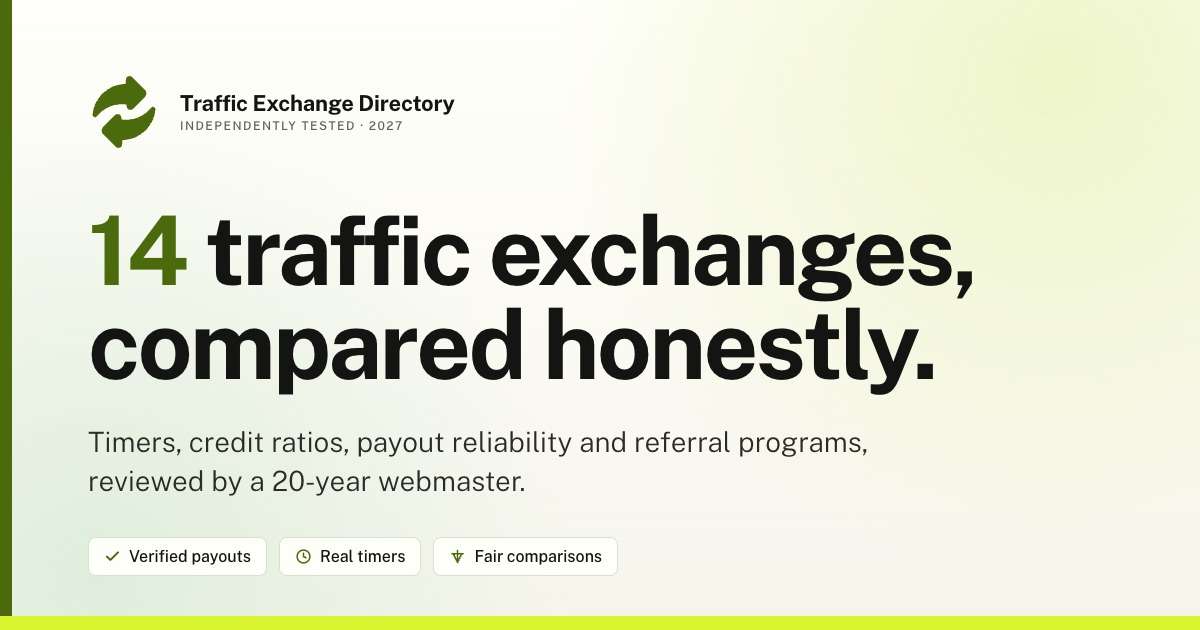
A curated exchange directory saves you the time of testing every platform yourself. The directory at exchangedirectory.pages.dev lists 14 manual traffic exchanges, each reviewed on timer length, credit ratio, and payout reliability after at least six months of use. That kind of vetting is rare. Most directories simply list links without any real testing. When you work through a curated list, you can focus on the platforms that have already proven themselves stable.
Start by picking two or three exchanges from the directory. Run each one for a couple of weeks. Track how many credits you earn per hour, how many visitors your site receives, and how those visitors behave. Do they bounce immediately, or do they click around? That data is more valuable than any feature list. Over time, you will develop a sense of which platforms align with your goals.
Final Thoughts on Choosing the Best Traffic Exchanges
Manual traffic exchanges are not a shortcut. They are a tool that rewards consistent effort. The best traffic exchanges are the ones that respect your time, pay out reliably, and produce visitors who actually engage with your content. Timer length, credit ratio, and payout reliability are the three pillars to evaluate. Ignore hype, skip platforms with no track record, and use a curated directory to narrow your options. The right exchange can become a steady part of your traffic strategy without costing a cent.